
Strengthening · Service line 04
Carbon Fibre Strengthening
In brief
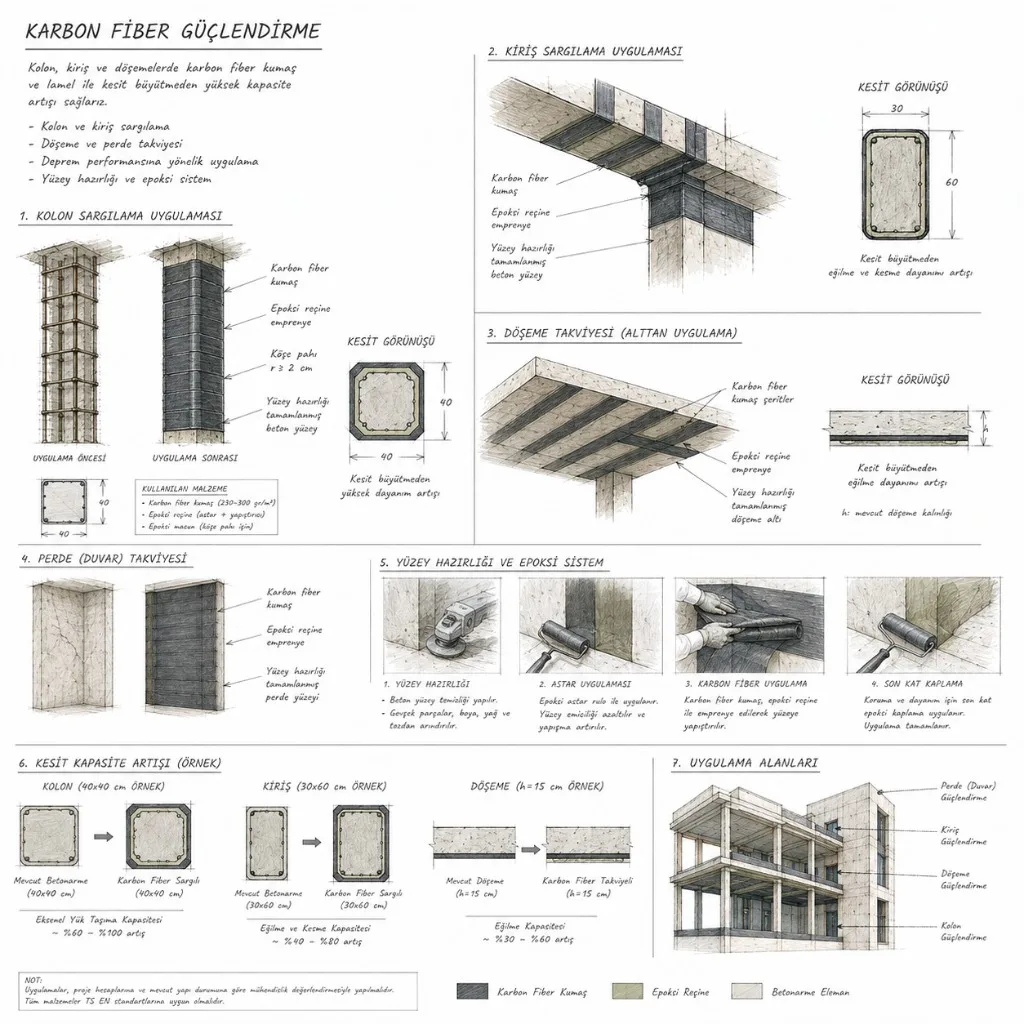
Carbon fibre strengthening (CFRP) is the bonding of carbon fibre fabric or laminates to an existing reinforced-concrete member with epoxy resin, in order to increase its flexural, shear and confinement capacity. Although it weighs about a fifth of steel, it offers far higher tensile strength; because it does not enlarge the section, it costs no usable floor space and adds no weight to the structure.
Carbon fibre strengthening is the fastest way to increase the capacity of an existing structure without enlarging its sections. With conventional jacketing the column grows thicker, formwork goes up, and after the pour you wait 28 days. With carbon fibre the applied thickness is a matter of millimetres and the system is ready to take load within a few days.
Zahan İnşaat carries out carbon fibre work as an authorised Sika dealer, using certified system products. That detail matters: the carbon fabric and the epoxy resin must be a compatible system from the same manufacturer. Mixing brands makes the bond performance impossible to document.
Where is carbon fibre strengthening used?
The application is decided by which capacity of the member falls short:
- Column wrapping — increases the ductility and axial capacity of a column. It is the most frequent requirement to come out of a seismic performance assessment.
- Beam flexural reinforcement — carbon laminate bonded to the soffit of a beam raises its bending moment capacity.
- Beam shear reinforcement — fabric wrapped in a U around the beam web increases shear capacity.
- Slab reinforcement — when the use of a floor changes and loads rise (archive, storage, machinery), laminate strips are applied to the slab.
- Masonry walls — in historic and masonry buildings, carbon mesh and fabric add in-plane strength.
- Chimneys, silos, minarets — wrapping works very efficiently on slender members with a circular section.
Application steps
Applied incorrectly, carbon fibre behaves like paper. What determines the result is not the fabric itself but the preparation beneath it.
- 1. Surface preparation — render and loose cover are removed and the concrete surface is opened up by grinding or blasting.
- 2. Repair — segregation, voids and corroded reinforcement are made good with repair mortar; corners are rounded to a radius of at least 25 mm.
- 3. Primer — an epoxy primer is applied to saturate the pores.
- 4. Filler — surface irregularities are levelled with epoxy putty.
- 5. Bonding — the carbon fabric is laid in saturating resin and rolled to expel air.
- 6. Protection — a coating or render is applied against UV and fire.
- 7. Testing — the bond is documented with a pull-off test.
Carbon fibre or reinforced-concrete jacketing?
The two are not rivals; they answer different problems. Carbon fibre comes to the fore where the capacity shortfall is limited, where the building must stay in use during the work, and where the section cannot be enlarged. Where the shortfall is large, where an irregularity has to be corrected, or where new shear walls are needed, reinforced-concrete jacketing is required. On most of our jobs the two are used together: the critical columns are jacketed and the rest are reinforced with carbon fibre.
What the scope covers
- Column and beam wrapping
- Slab and shear wall laminate reinforcement
- Carbon fabric overlay on masonry walls
- Surface preparation, epoxy system and pull-off testing
Projects from this service line
 Carbon Fibre and Reinforced-Concrete Strengthening
Four methods in one building: column jacketing, carbon fibre column wrapping, carbon laminates embedded in the slab and carbon fabric overlay on walls.
Carbon Fibre and Reinforced-Concrete Strengthening
Four methods in one building: column jacketing, carbon fibre column wrapping, carbon laminates embedded in the slab and carbon fabric overlay on walls.
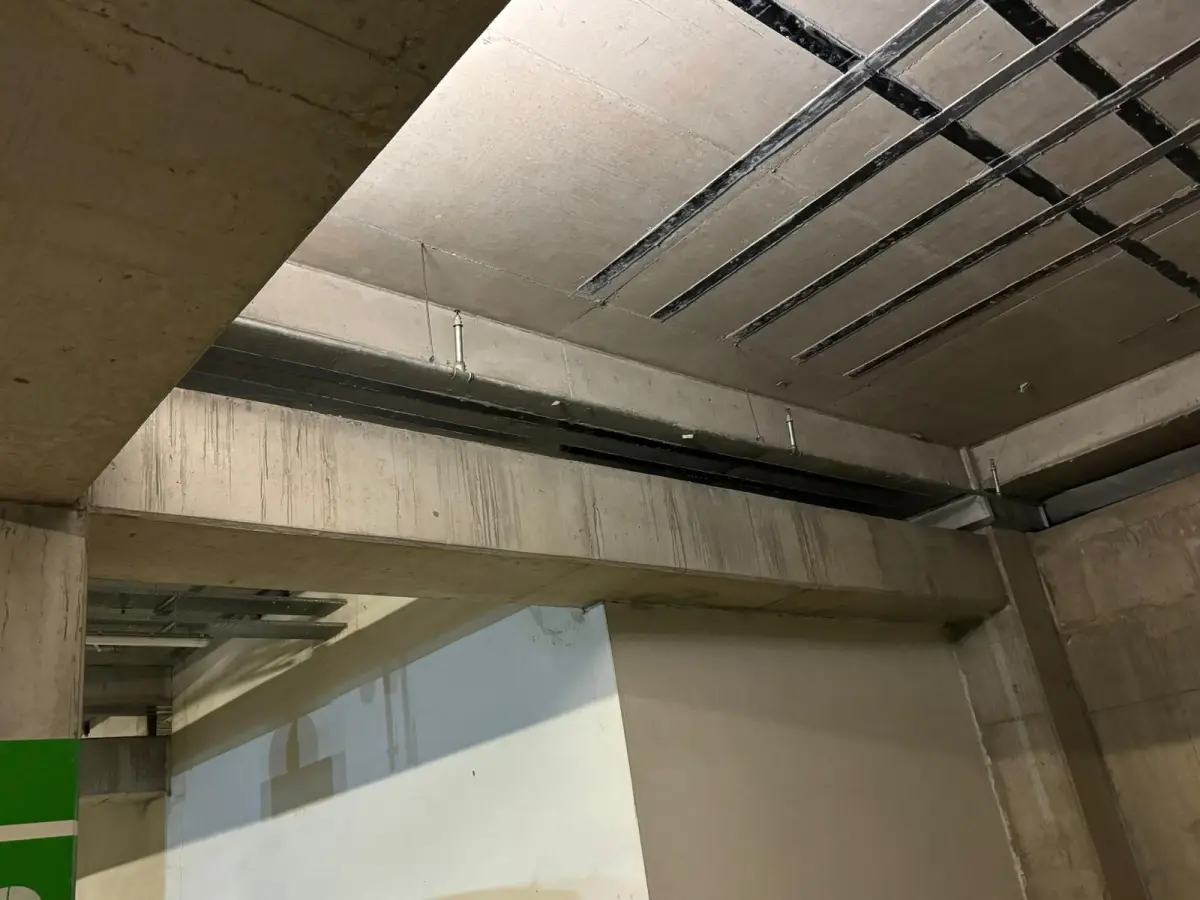 Isparta City Hospital Carbon Plate Strengthening
Beam strengthening in a working city hospital: carbon plate, epoxy bonding and staged work that never interrupted patient movement.
Isparta City Hospital Carbon Plate Strengthening
Beam strengthening in a working city hospital: carbon plate, epoxy bonding and staged work that never interrupted patient movement.
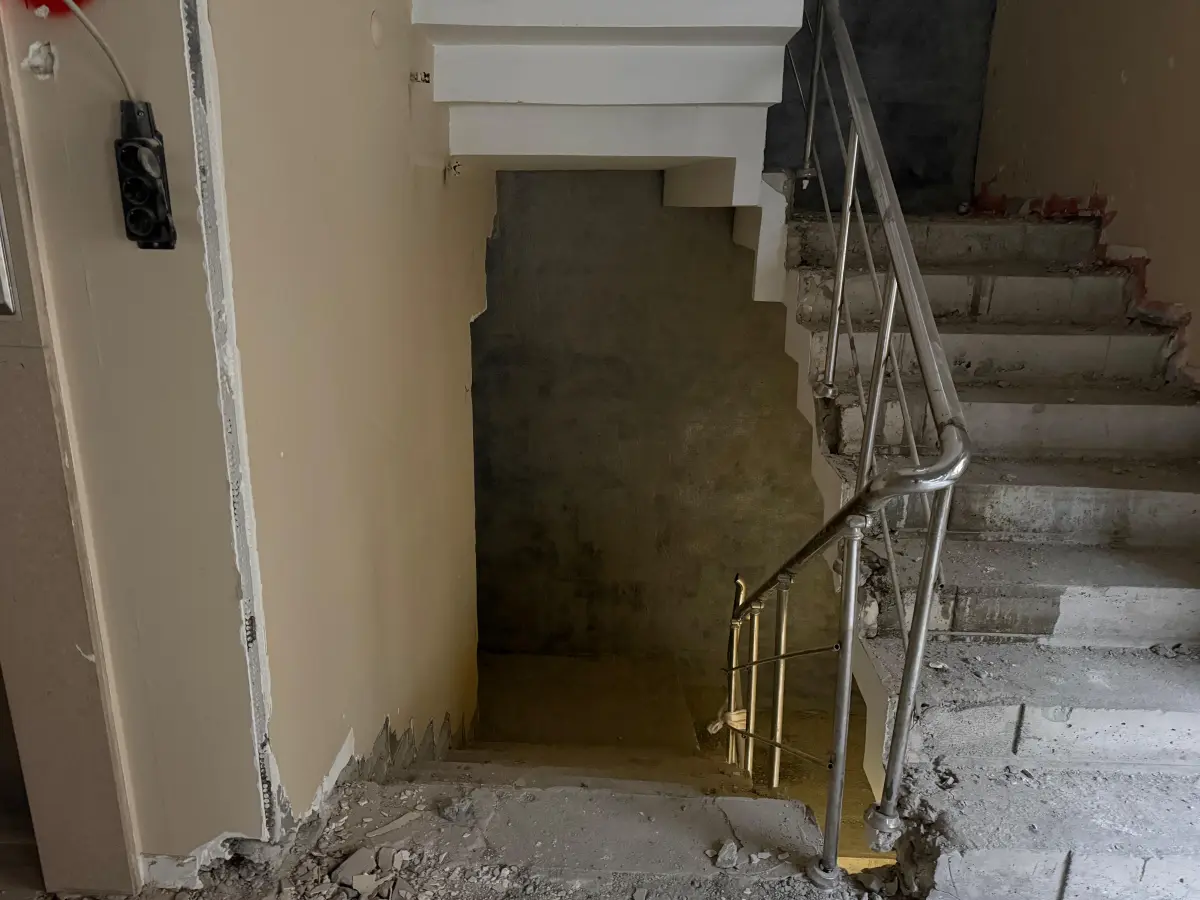 İstiklal Street Ziraat Bank Carbon Fibre Strengthening
Carbon fibre strengthening in a bank building on İstiklal Street — added capacity without enlarging the section, in a historic fabric.
İstiklal Street Ziraat Bank Carbon Fibre Strengthening
Carbon fibre strengthening in a bank building on İstiklal Street — added capacity without enlarging the section, in a historic fabric.
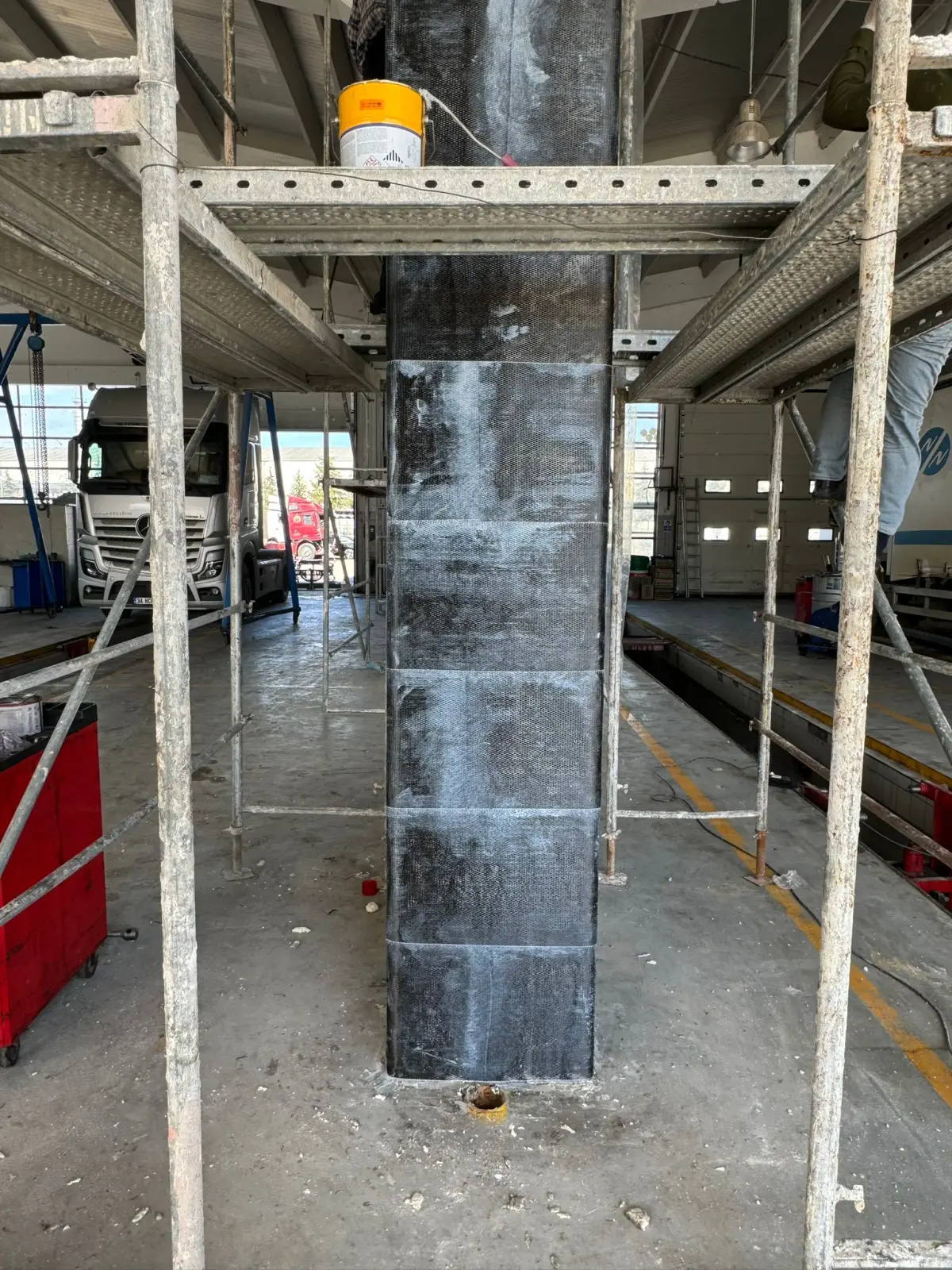
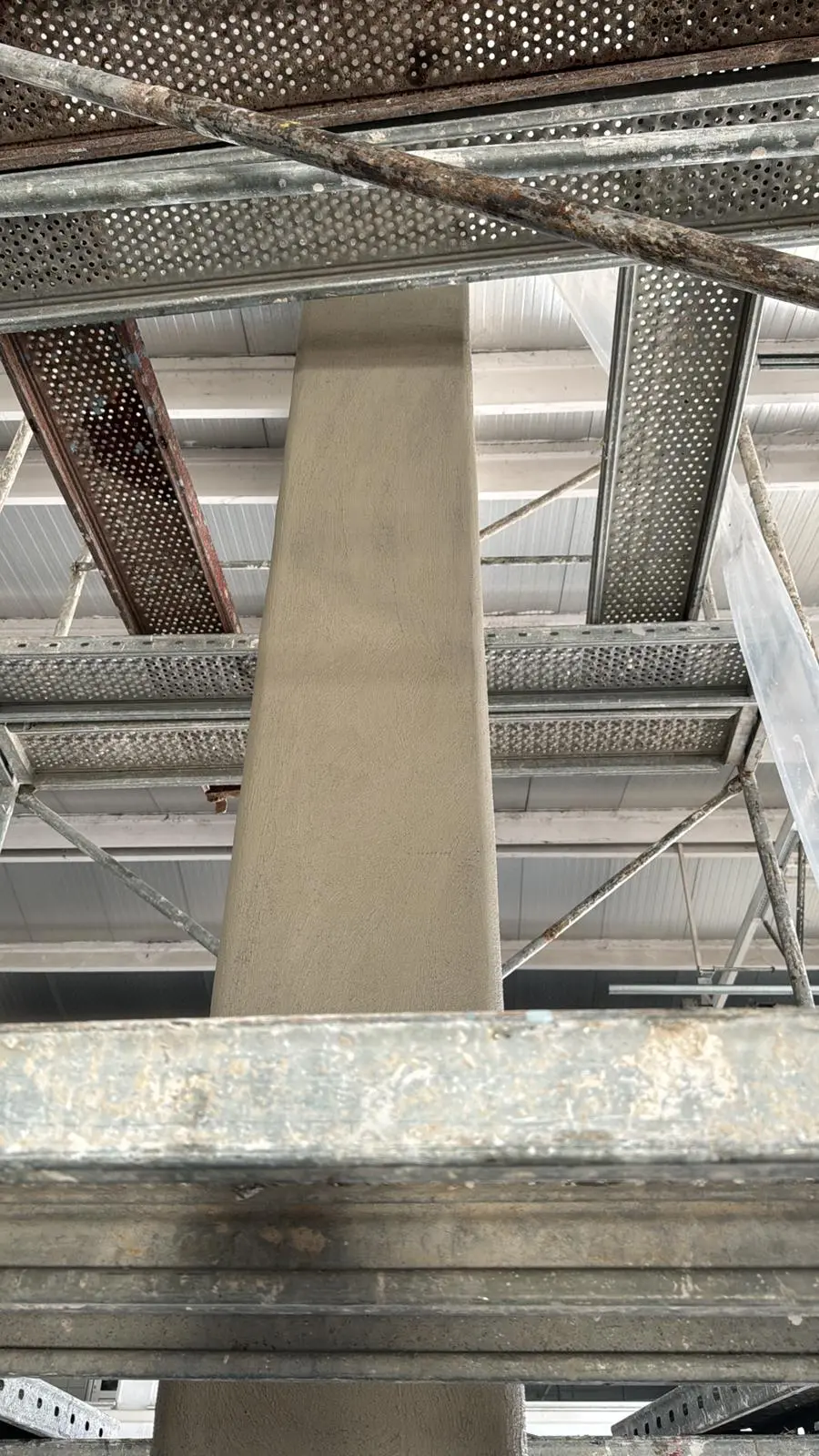 Mercedes Mengerler Samsun Strengthening
Carbon fibre strengthening at the Mengerler Samsun facility — staged so the service centre and showroom kept working.
Mercedes Mengerler Samsun Strengthening
Carbon fibre strengthening at the Mengerler Samsun facility — staged so the service centre and showroom kept working.
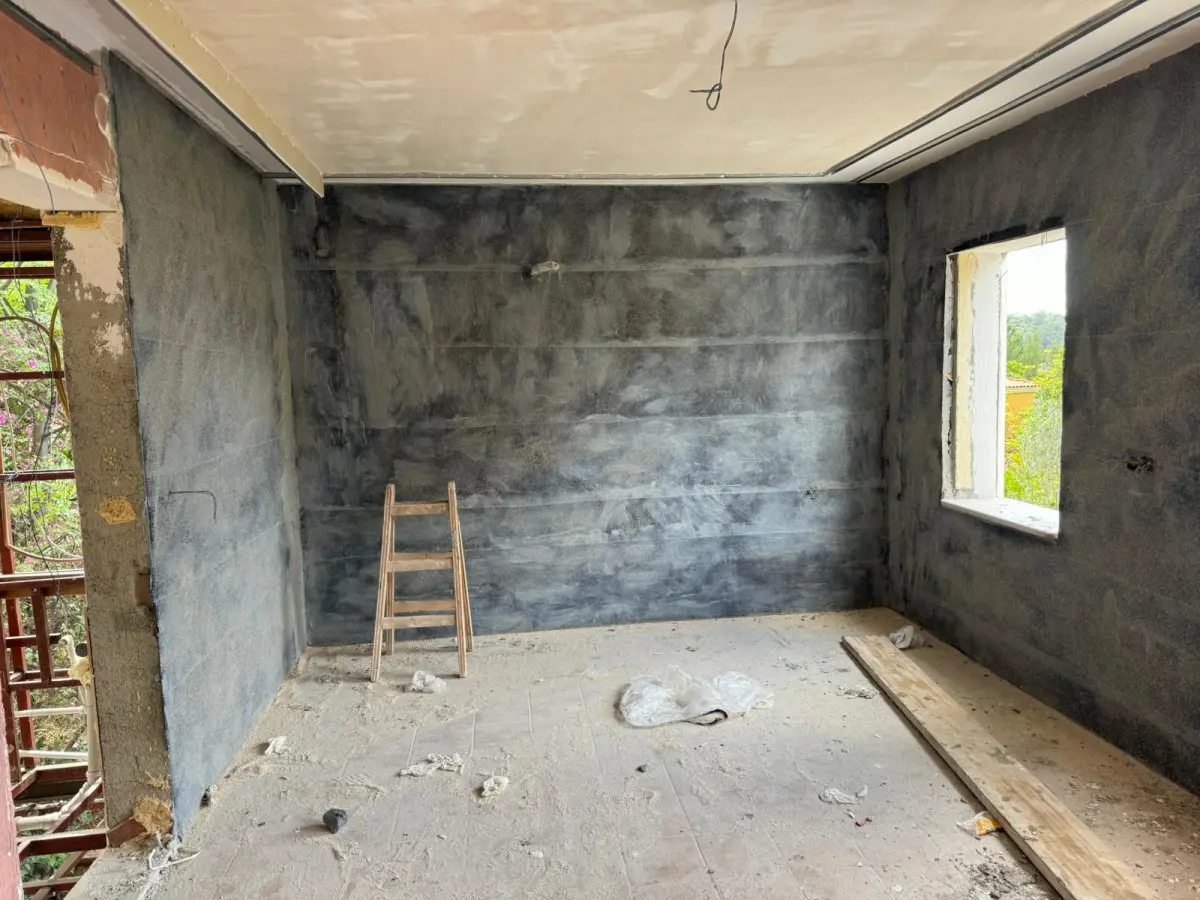 Muğla Göcek Rossmarin Residences Strengthening
Strengthening a residential development in a coastal climate at Göcek — concrete repair and carbon fibre against corrosion risk.
Muğla Göcek Rossmarin Residences Strengthening
Strengthening a residential development in a coastal climate at Göcek — concrete repair and carbon fibre against corrosion risk.
Frequently asked questions
Can carbon fibre strengthening be done while the building is occupied?
In most cases yes. Because the applied thickness is a matter of millimetres, no formwork, concrete pours or heavy plant are needed, and dust and noise are markedly lower than with jacketing. By staging the work unit by unit, it can be carried out without emptying the whole building.
How long does carbon fibre strengthening last?
A correctly applied CFRP system, protected against UV and fire, works for the remaining service life of the structure. Three things are critical: the surface preparation, the mixing ratio of the epoxy, and the humidity and temperature conditions during application. When these three are recorded, the system is long-lived.
Is a design required for carbon fibre strengthening?
Yes. The work must rest on a seismic performance assessment of the building; how many layers of fabric or how many laminate strips go on which member follows from that analysis. If you have no performance report, we coordinate with a licensed structural office on your behalf. Carbon applied without a design does not turn the money spent into safety.
Is carbon fibre fire-resistant?
The carbon fibre itself withstands high temperatures, but the epoxy resin that bonds it loses strength above its glass transition temperature (typically 60–80 °C). CFRP work is therefore covered with fire-protective render, plasterboard or sprayed fire protection. Because passive fire protection is one of our own service lines, we can resolve both jobs with a single crew.
Quote
Get a price for Carbon Fibre Strengthening
Share the dimensions and the current condition and we will price it item by item. In Samsun and the surrounding provinces we come out for the survey ourselves.
Çobanözü Mah. Toybelen Küçük Sanayi Sitesi, Atakum / Samsun