
Türkiye · 2024
Carbon Fibre and Reinforced-Concrete Strengthening — Columns, Slabs and Walls
In brief
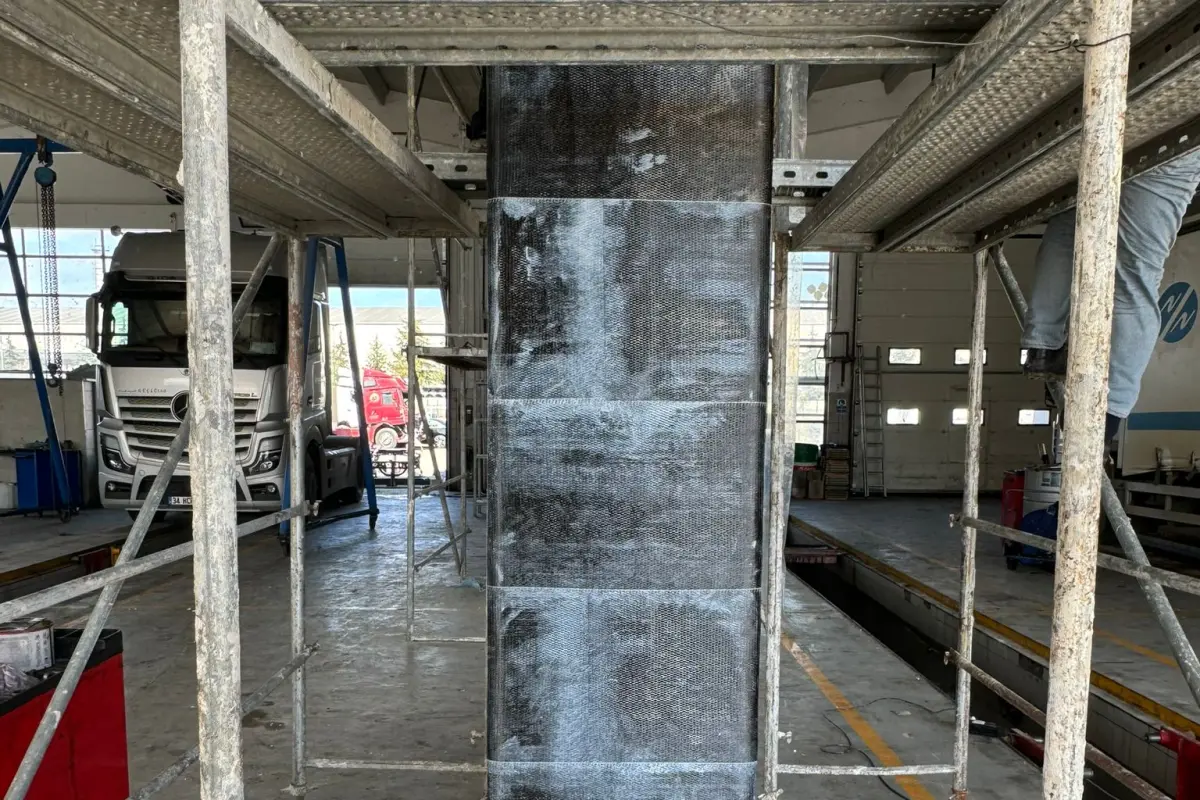
On this project the seismic performance of a building was raised by using reinforced-concrete jacketing and carbon fibre (CFRP) strengthening together. The critical columns were jacketed with a reinforcement cage and new concrete; the remaining columns were wrapped in carbon fibre fabric, carbon laminates were embedded in channels cut into the slab, and the shear wall and wall surfaces were overlaid with carbon fabric.
- System
- Certified epoxy and carbon system products
- Methods
- Jacketing + CFRP fabric + carbon laminate
- Year built
- 2024
- Areas treated
- Columns, slabs, shear walls and walls
- Structure type
- Reinforced-concrete building (basement and ground floor)
- Service line
- Carbon Fibre Strengthening
The question asked most often on strengthening projects is this: "should we go for carbon fibre or jacketing?" This project shows that the right answer is usually "both".
The building’s performance assessment showed a serious axial capacity shortfall in some of the columns and inadequate flexural capacity in the slab. Columns with a large shortfall were enlarged by reinforced-concrete jacketing; those with a limited shortfall were wrapped in carbon fibre, and the slab was reinforced with embedded carbon laminate.
The four methods applied
For each member, the method best suited to that member’s need was chosen:
- Column jacketing — a reinforcement cage was built around the columns with the largest shortfall, formwork erected and new concrete cast.
- Carbon fibre column wrapping — columns needing ductility and shear capacity were wrapped in CFRP fabric.
- Slab carbon laminate — parallel channels were cut into the slab, carbon laminate strips were embedded in them with epoxy, and the channels were closed with repair mortar.
- Wall and shear wall fabric overlay — wall surfaces were overlaid end to end with carbon fabric for in-plane strength.
- Epoxy injection — existing cracks were filled with low-viscosity epoxy before the fabric was applied.
Why embedded laminate was chosen for the slab
Embedding the carbon laminate in channels cut into the slab, rather than bonding it to the surface, brings two advantages. First, because the laminate sits inside the concrete it takes bond on three faces, so the risk of debonding falls markedly. Second, once the floor finish goes back there is no build-up at the surface — the floor level does not change. The channel depth and spacing were set by the calculation in the strengthening design. In the literature this method is called NSM (near-surface mounted).
Surface preparation: the invisible half of the job
In carbon fibre work, almost every failure traces back to surface preparation. On this site the following steps were carried out in order:
- Existing render and loose concrete were stripped back to sound concrete.
- Corroded reinforcement was cleaned and coated with an anti-corrosion primer.
- Voids and segregation were filled with structural repair mortar.
- Column corners were rounded so that the fabric would not be cut on a sharp arris.
- Epoxy primer was applied and surface irregularities levelled with epoxy putty.
- The fabric was laid in saturating resin and air bubbles rolled out.
Site photographs
20 frames. Tap a photograph to enlarge it.
Frequently asked questions about this project
Can jacketing and carbon fibre be used together in the same building?
Yes, and on most projects that is the most efficient solution. Jacketing is used on members with a large capacity shortfall and carbon fibre on those with a limited one. Both the total cost and the time on site come down compared with resolving everything by a single method.
How is carbon laminate embedded in a slab?
Narrow channels are cut into the slab surface on the axes and at the spacing set by the strengthening design. The channel is cleared of dust, filled with epoxy adhesive, and the carbon laminate strip is pressed into place. The channel is then closed with structural repair mortar. In the literature this method is called NSM (near-surface mounted).
How is it documented that the work was done correctly?
Three records are kept: before-and-after photographs, the batch numbers and declarations of performance of the products used, and the pull-off test results after application. Together those three form the technical file showing that the strengthening was carried out in accordance with the design.
How long does strengthening on this scale take?
It depends on the number of storeys and members. The carbon-fibre-led sections progress in a matter of days, while on jacketed columns the concrete strength gain sets the programme. On this project the two methods were staged and run in parallel, so the waiting periods overlapped.
A similar job
Get a quote for Carbon Fibre Strengthening
Share the dimensions and the current condition; we will price it item by item.
Çobanözü Mah. Toybelen Küçük Sanayi Sitesi, Atakum / Samsun
Our other projects
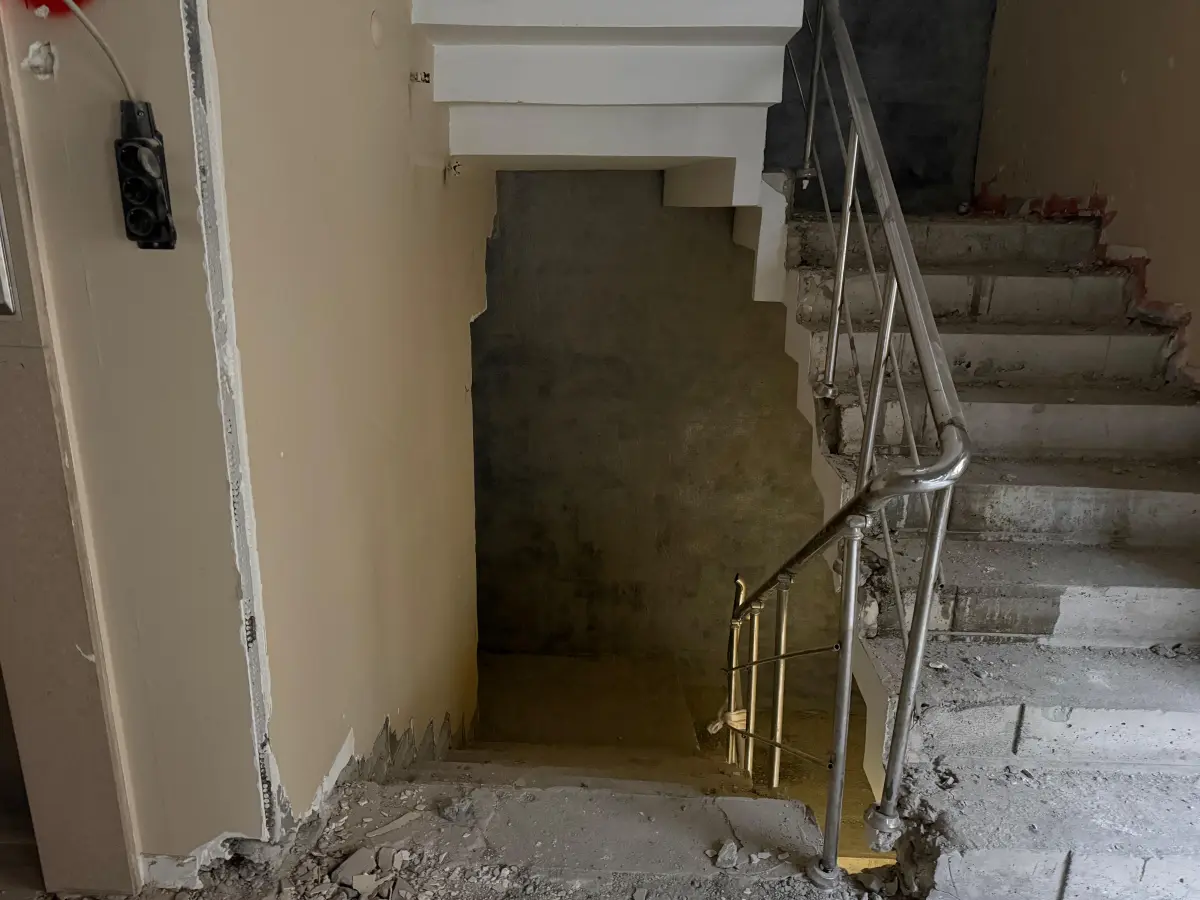 İstiklal Street Ziraat Bank Carbon Fibre Strengthening
Carbon fibre strengthening in a bank building on İstiklal Street — added capacity without enlarging the section, in a historic fabric.
İstiklal Street Ziraat Bank Carbon Fibre Strengthening
Carbon fibre strengthening in a bank building on İstiklal Street — added capacity without enlarging the section, in a historic fabric.
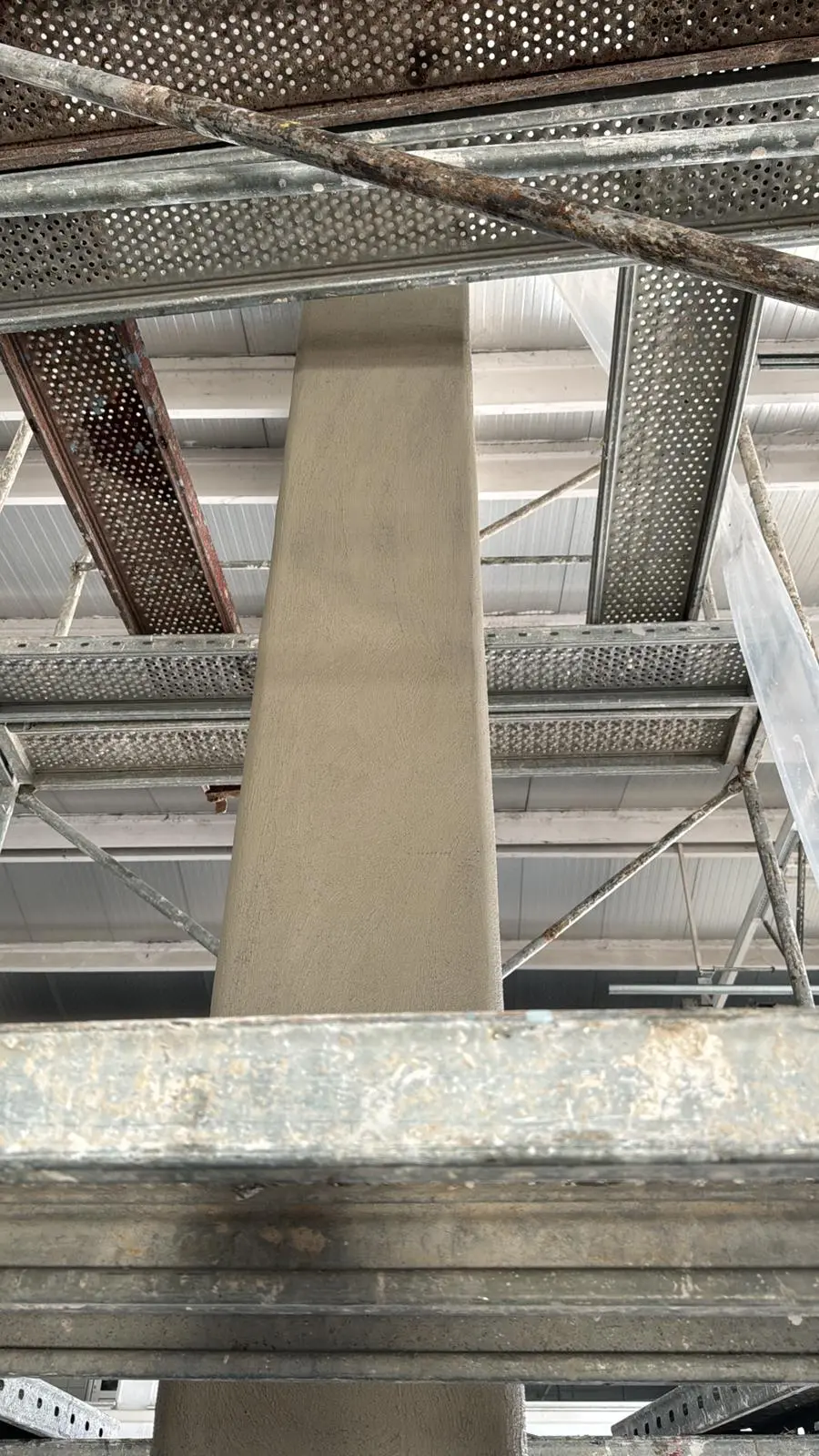 Mercedes Mengerler Samsun Strengthening
Carbon fibre strengthening at the Mengerler Samsun facility — staged so the service centre and showroom kept working.
Mercedes Mengerler Samsun Strengthening
Carbon fibre strengthening at the Mengerler Samsun facility — staged so the service centre and showroom kept working.
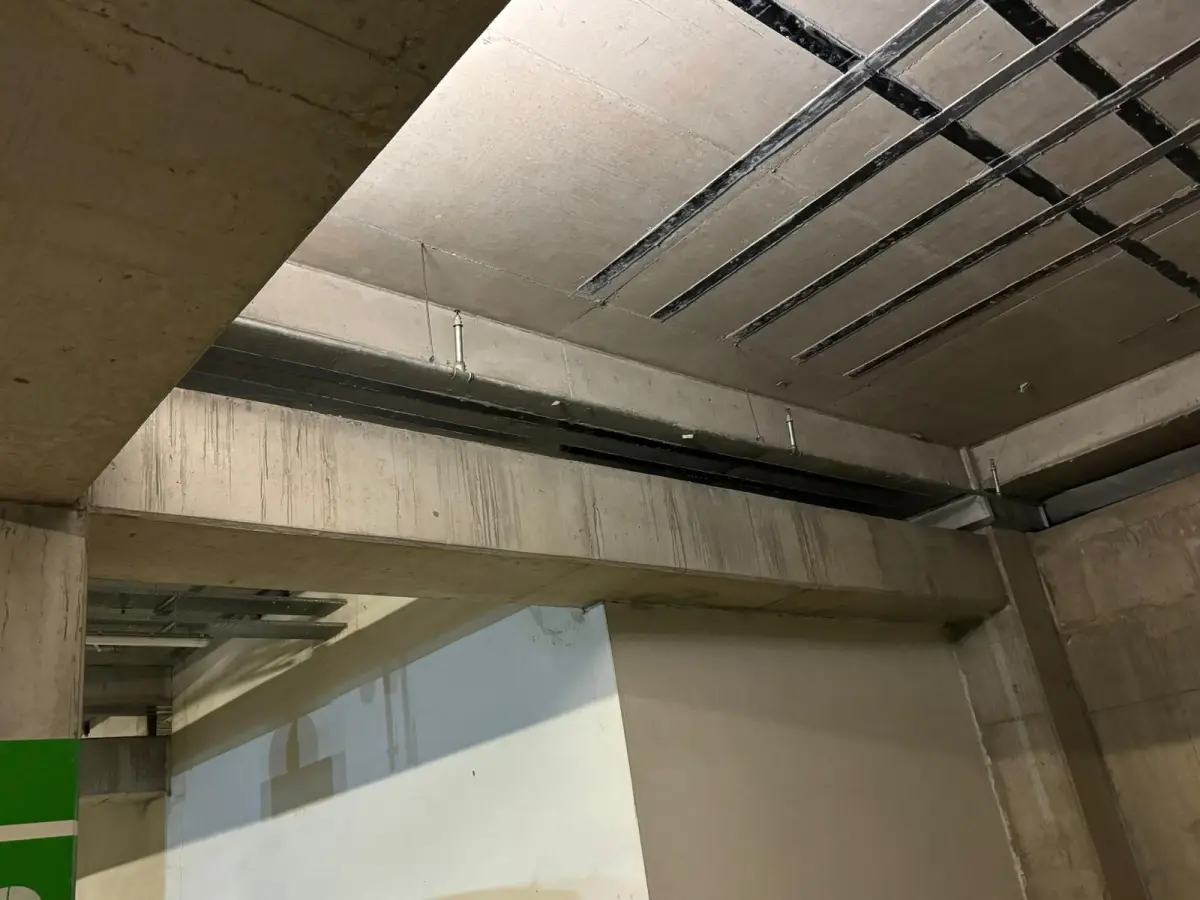 Isparta City Hospital Carbon Plate Strengthening
Beam strengthening in a working city hospital: carbon plate, epoxy bonding and staged work that never interrupted patient movement.
Isparta City Hospital Carbon Plate Strengthening
Beam strengthening in a working city hospital: carbon plate, epoxy bonding and staged work that never interrupted patient movement.