
Manufacturing · Service line 06
Fibreglass Formwork Manufacture
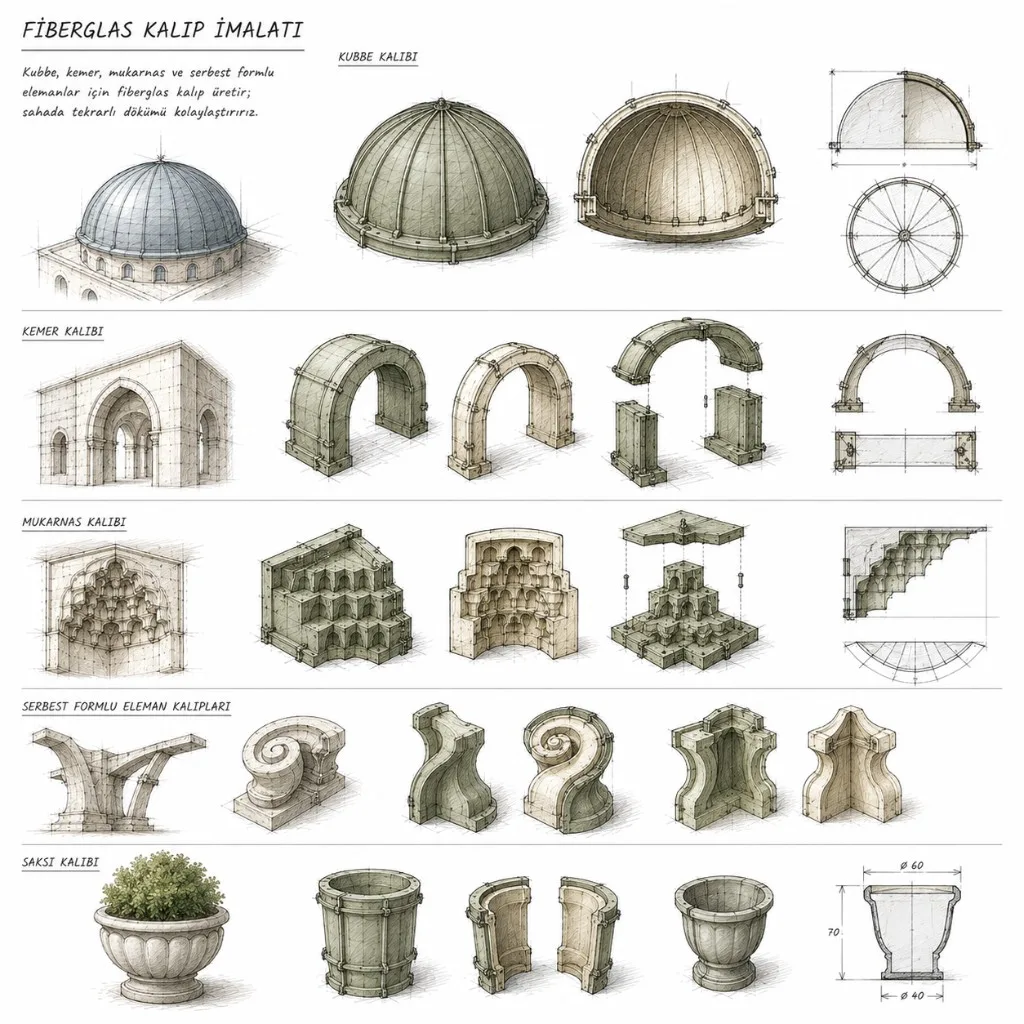
In brief
Fibreglass formwork (GRP formwork) is lightweight formwork made from glass-fibre-reinforced polyester resin, used for curved and decorated concrete surfaces. It produces forms that cannot be achieved in timber or steel — domes, arches, muqarnas and rosettes — with a smooth face. Being light, it can be moved without a crane and, properly maintained, reused dozens of times.
Concrete takes the shape of its formwork. On flat surfaces that is no problem, but as soon as a dome, an arch or muqarnas is involved, timber formwork becomes both expensive and impossible to reuse. Fibreglass formwork fills exactly that gap.
Zahan İnşaat also produces for others the GRP formwork it uses on its own mosque and minaret projects. The process starts with the pattern: a timber or foam master is made first, gelcoat and glass-fibre layers are laid over it, and the cured shell is then supported by a steel frame.
Where is fibreglass formwork the right choice?
What makes GRP formwork economical is repetition. It comes into its own on any job where the same form has to be cast more than once:
- Mosque domes and half-domes (including squinches and pendentives)
- Arches, column capitals and muqarnas rings
- Minaret şerefe shells and cap forms
- Precast facade panels and decorative concrete elements
- Pools, landscaping and free-form architectural elements
Fibreglass, timber or steel?
Each of the three materials has its own territory:
- Timber — one-off work, simple geometry. Cheap to start with, expensive on repetition.
- Steel — flat surfaces under high pressure. Heavy, and not economical for curved forms.
- Fibreglass — curved and decorated surfaces. Light, and the highest surface quality of the three; the initial mould cost falls once divided by the number of reuses.
What the scope covers
- Dome, half-dome and arch formwork
- Muqarnas, rosette and decorative element moulds
- Lightweight, high-strength GRP manufacture
- Made to measure, from pattern to finished mould
Projects from this service line
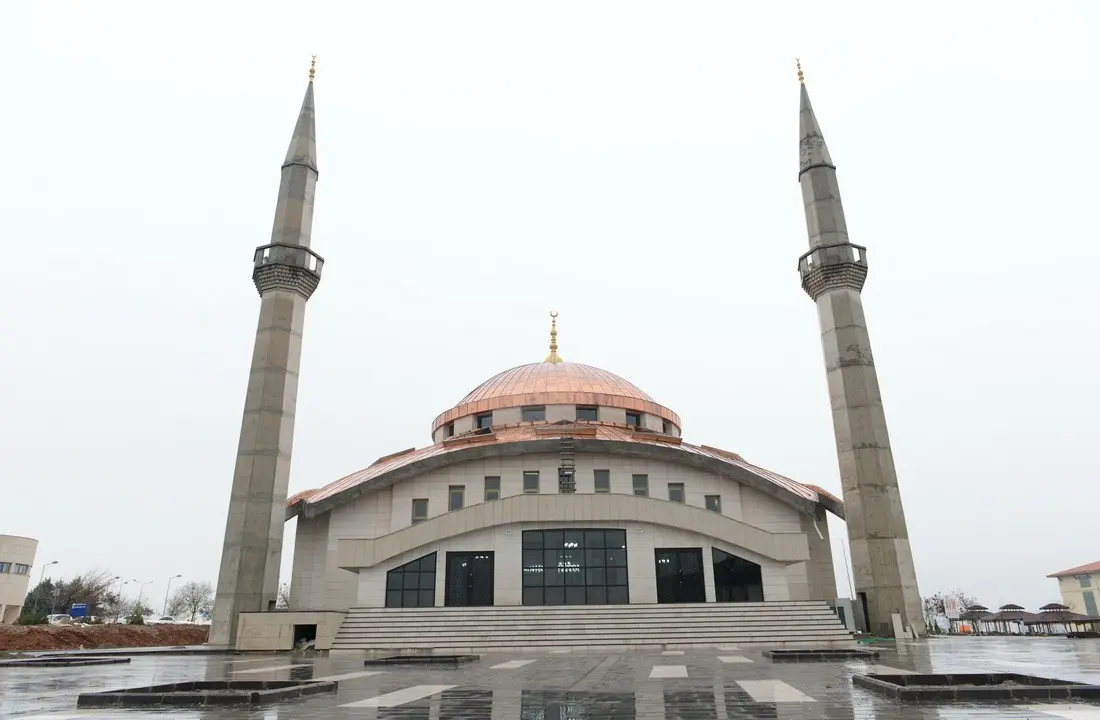 Kahramanmaraş Sütçü İmam University Mosque
Minaret construction at a university campus mosque — a project in which every stage, from base reinforcement to şerefe formwork, is documented.
Kahramanmaraş Sütçü İmam University Mosque
Minaret construction at a university campus mosque — a project in which every stage, from base reinforcement to şerefe formwork, is documented.
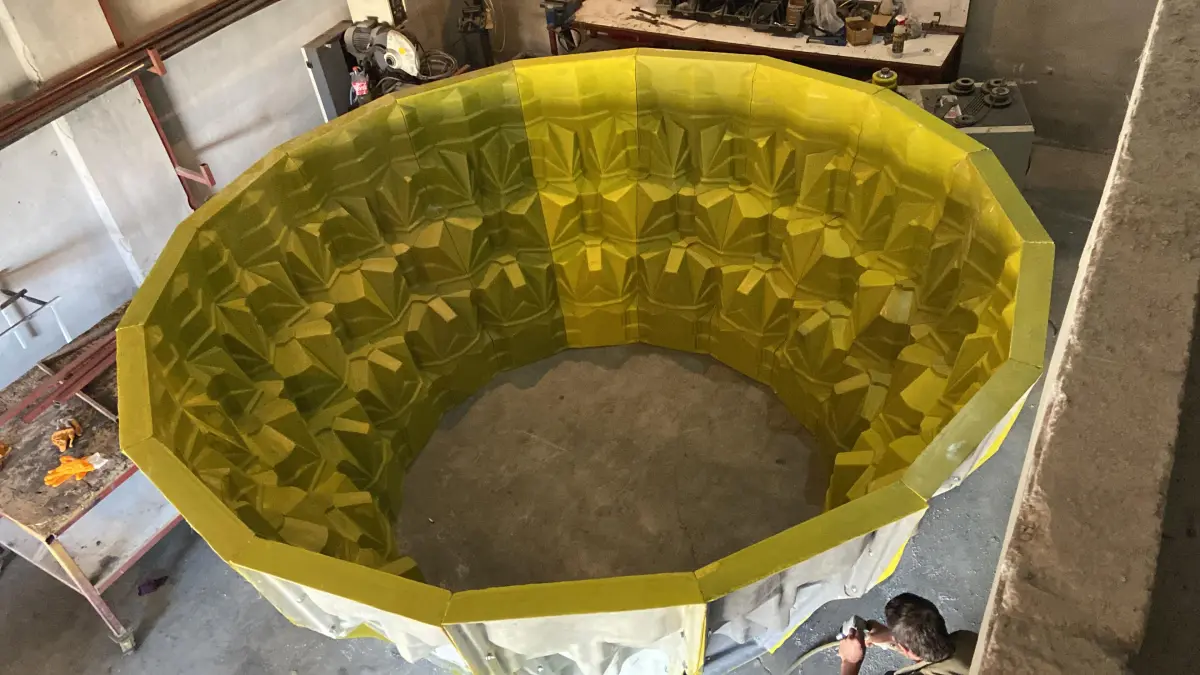 Guinea — Albayrak İnşaat Formwork Manufacture
A fibreglass formwork set produced for Albayrak İnşaat’s Guinea project — numbered, packed and shipped to Africa.
Guinea — Albayrak İnşaat Formwork Manufacture
A fibreglass formwork set produced for Albayrak İnşaat’s Guinea project — numbered, packed and shipped to Africa.
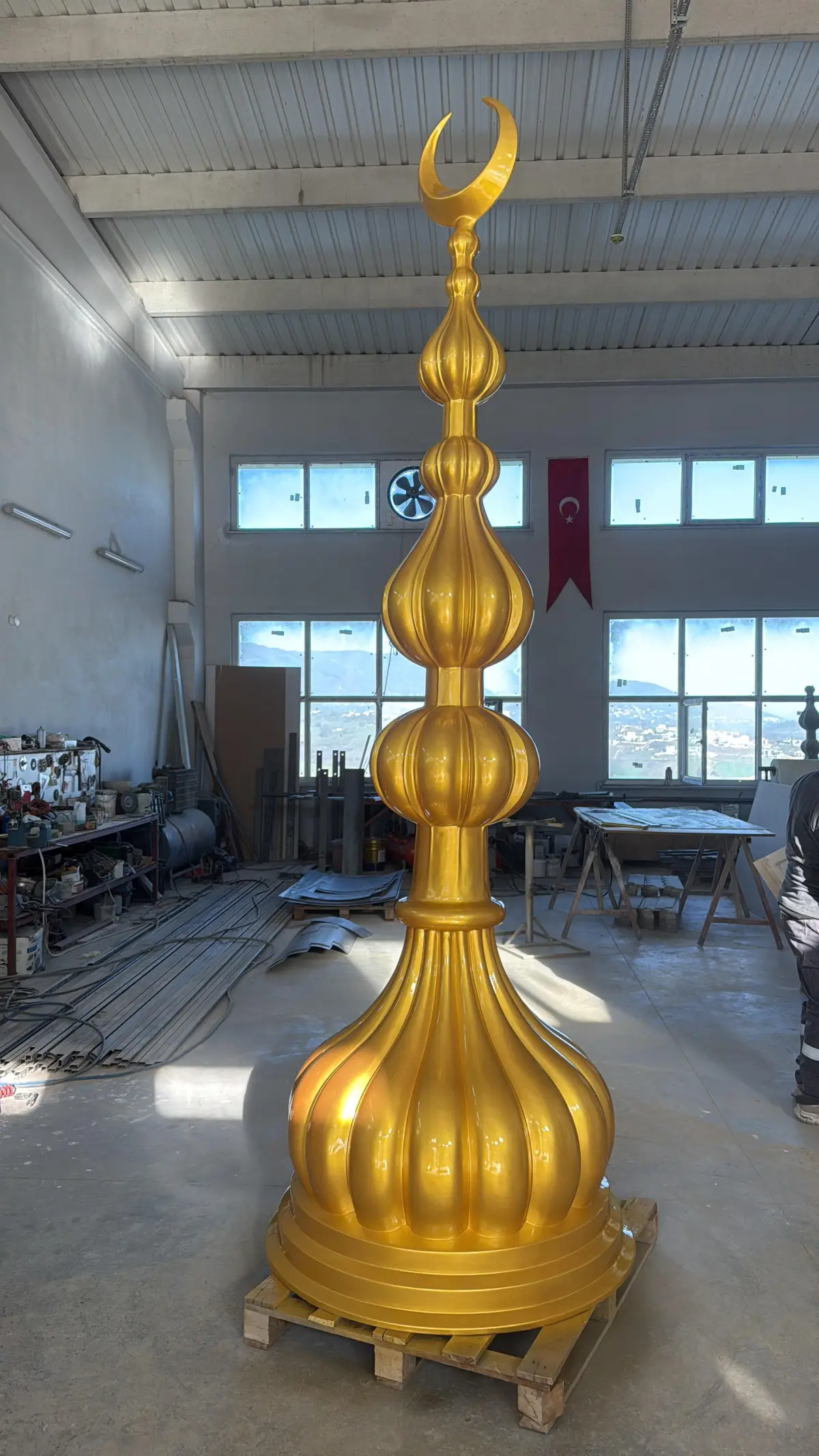 Fibreglass Finial (Alem) Manufacture and Design
Finials produced in our own workshop from model making to gold-leaf finish, and the design archive built up over the years — from Gaziantep Akkent to Melbourne, from Dortmund to Pristina.
Fibreglass Finial (Alem) Manufacture and Design
Finials produced in our own workshop from model making to gold-leaf finish, and the design archive built up over the years — from Gaziantep Akkent to Melbourne, from Dortmund to Pristina.
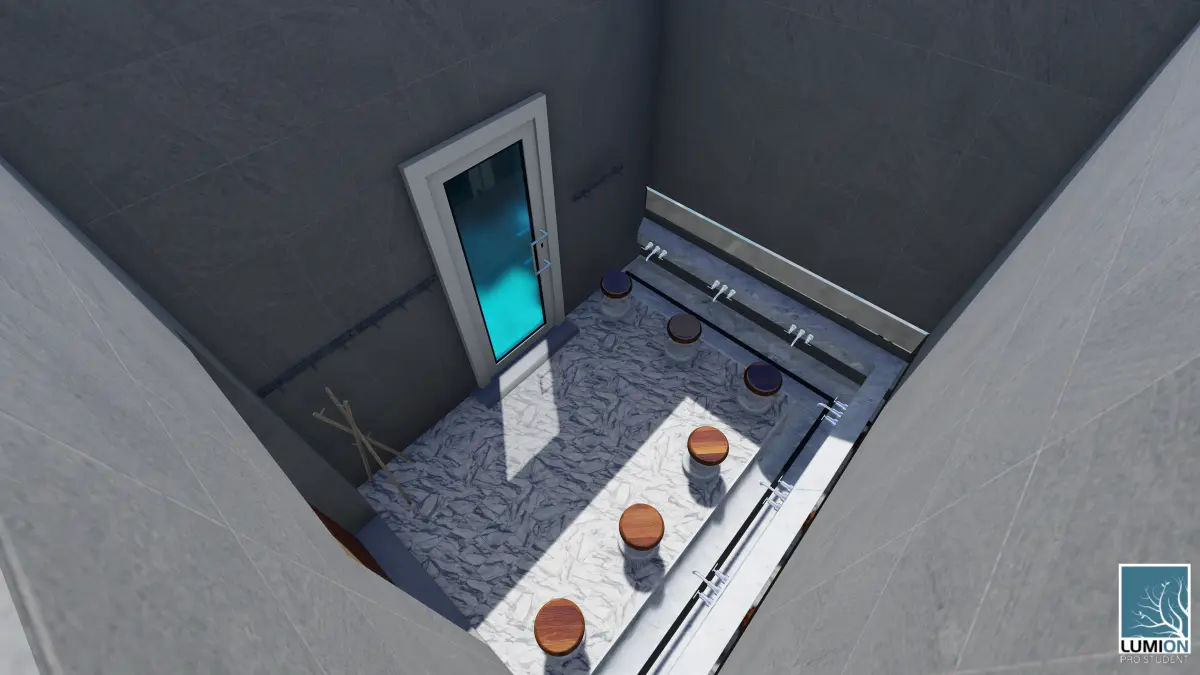 Şadırvan and Ablution Facility Design
A many-sided şadırvan designed for an enclosed ablution facility — from three-dimensional visualisation to fibreglass mould and site application.
Şadırvan and Ablution Facility Design
A many-sided şadırvan designed for an enclosed ablution facility — from three-dimensional visualisation to fibreglass mould and site application.
Frequently asked questions
How many times can fibreglass formwork be used?
As long as the gelcoat surface is protected and a suitable release agent is used, more than 50 pours are achievable. When scratching or dulling starts on the surface, the gelcoat is renewed and the mould is returned to service.
I have no 3D model, only drawings. Can you still make the mould?
Yes. We can produce a master pattern from two-dimensional architectural drawings or even a hand sketch. On decorated work it is also possible to take a mould from an existing piece — a rosette or a section of muqarnas — and once the piece reaches us we reproduce it exactly.
What is the lead time for a mould?
It depends on the dimensions and the complexity of the decoration. A standard dome segment or arch mould is delivered in 15–25 working days including the pattern; on heavily detailed work such as muqarnas the pattern stage can take longer.
Quote
Get a price for Fibreglass Formwork Manufacture
Share the dimensions and the current condition and we will price it item by item. In Samsun and the surrounding provinces we come out for the survey ourselves.
Çobanözü Mah. Toybelen Küçük Sanayi Sitesi, Atakum / Samsun