
Samsun · Atakum · 2026
Fibreglass Finial (Alem) Manufacture and Design
In brief
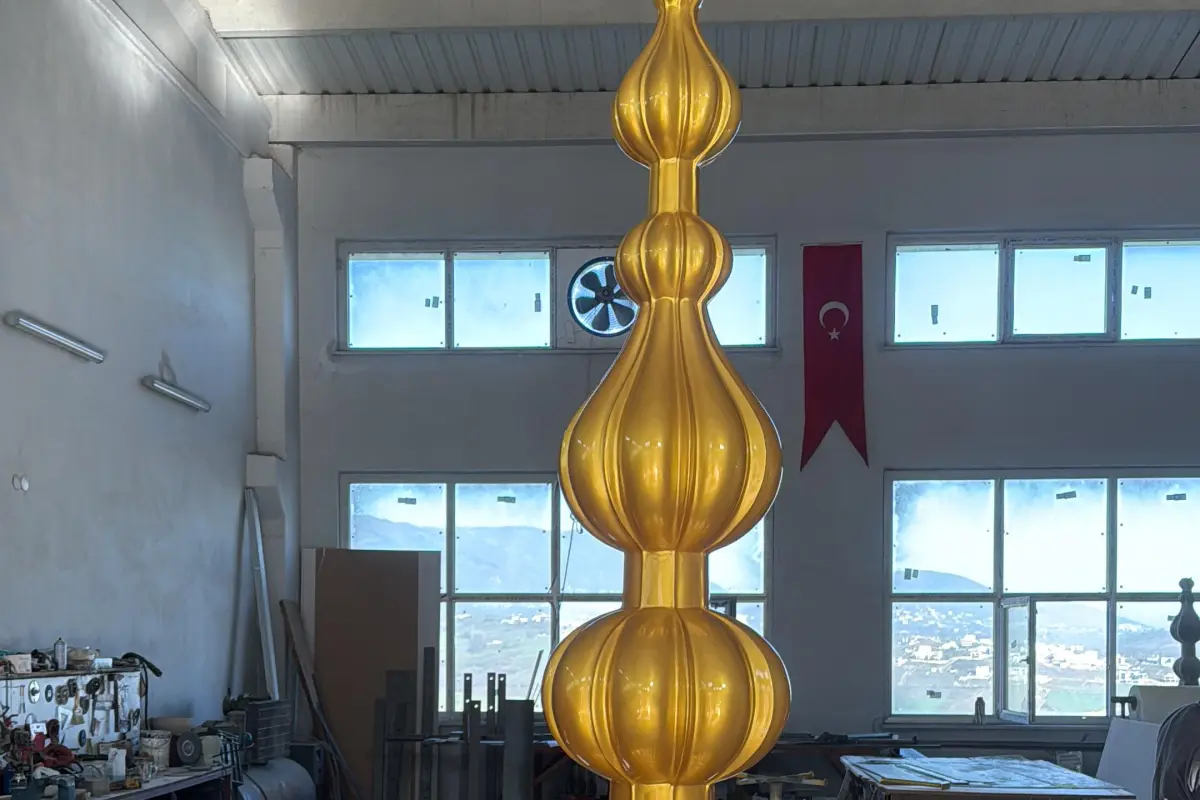
Zahan İnşaat produces minaret and dome finials (alem) in fibreglass in its own workshop. The process runs from three-dimensional modelling of the design, through a full-scale physical model, a fibreglass negative mould, lamination and surface finishing. Finials are finished in gold leaf or metal coating and have been shipped to projects at home and abroad, including Gaziantep Akkent, Melbourne in Australia and Dortmund in Germany. This page shows both photographs of finished finials and model studies from the design archive.
- Scope
- Finial design, model, mould and manufacture
- Finish
- Gold leaf or metal coating
- Material
- Fibreglass (GRP), steel core spindle
- Shipment
- Domestic and international
- Application
- Minaret, main dome, half dome, weight tower and steel-minaret finials
- Design archive
- Gaziantep Akkent, Melbourne (Australia), Dortmund (Germany)
- Service line
- Fibreglass Formwork Manufacture
The alem is the small piece at the very top of a minaret, and it is what finishes a mosque’s silhouette. Classically the alem was beaten from copper; today fibreglass allows the same form to be given more lightly and with a longer life.
We produce the alem end to end in our workshop: three-dimensional modelling of the design, a full-scale model, a negative mould, lamination and surface finishing. The gallery below shows finished finials photographed on site alongside model studies from our design archive — which finial goes where on a given mosque is decided by working through that archive.
How many kinds of finial does one mosque have?
The alem is not only the piece set on top of the minaret. A mosque carries finials at several points, in different proportions, and each needs its own model:
- Minaret finial — the slenderest and tallest proportion; designed to be read from a distance.
- Main dome finial — the largest of the set, scaled to the diameter of the dome.
- Half dome / small dome finial — the same language as the main dome, at reduced proportion.
- Weight tower finial — sits on the turrets around the dome skirt.
- Fountain and porch finials — seen at courtyard scale, from close to the ground.
Why a fibreglass finial is light and long-lived
The weight of the finial governs not only its own support but the method of installation. A fibreglass alem weighs far less than a copper or cast one of the same size, which makes installation at height easier and lowers the anchorage load at the top of the minaret.
- It does not corrode — the chief problem of a metal finial disappears in coastal and humid regions.
- Its thermal movement is low; it does not work the anchorage loose over the years.
- The finish can be renewed — gold leaf or paint can be maintained without removing the finial.
From design to installation
Finial manufacture runs in five steps: three-dimensional design and a study of proportion; a full-scale model; a fibreglass negative mould; lamination with the steel core spindle set in place; and surface finishing. The proportion study is the step most often skipped — the finial will be seen thirty metres up, and a proportion that looks right on a desk reads quite differently there.
Finials for steel minarets
In the steel minaret design we prepared for Dortmund in Germany, the finial was studied to sit with the steel language of the shaft. A steel minaret asks for a different connection from a concrete one: the core spindle seats onto a flange welded directly to the steel shaft.
Site photographs
36 frames. Tap a photograph to enlarge it.
Frequently asked questions about this project
How long does a finial take to produce?
If one of our existing moulds is used, production is complete within a few weeks. A new design needs a model and a mould, which lengthens the programme appreciably from design approval. Settling the finial type at the start of a project therefore shortens the schedule.
Can we choose from the models in your archive?
Yes — that is how most jobs begin. The design images in the gallery are models we have produced over the years; one of them can be selected and scaled to the height of your minaret. Where the mould already exists, both time and cost fall appreciably.
Is there an alternative to gold leaf?
There is. Gold leaf is the classical choice; beyond it, brass- and copper-toned metal coatings or UV-resistant paint can be applied. On coastal mosques the effect of salt should also be weighed in the decision.
Do you accept an order for a single finial?
Yes. A single finial can be ordered from our existing models. The size is set against the shaft diameter and the overall height of the minaret; send a photograph and the minaret height and we will recommend the right scale.
A similar job
Get a quote for Fibreglass Formwork Manufacture
Share the dimensions and the current condition; we will price it item by item.
Çobanözü Mah. Toybelen Küçük Sanayi Sitesi, Atakum / Samsun
Our other projects
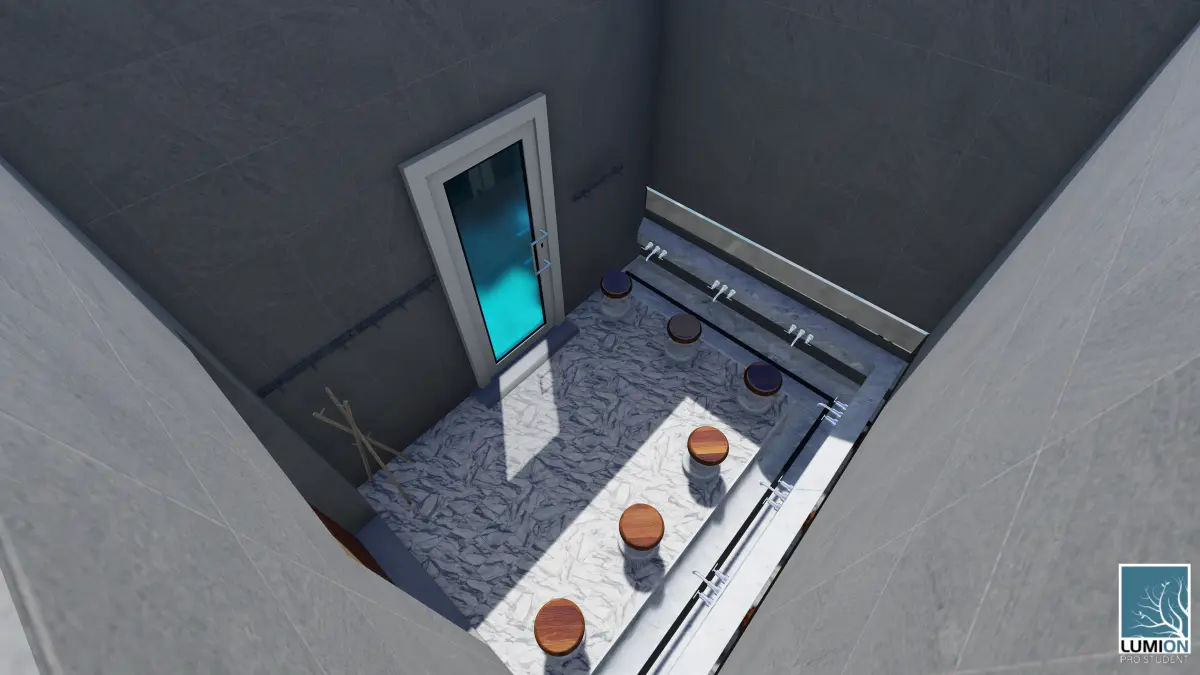 Şadırvan and Ablution Facility Design
A many-sided şadırvan designed for an enclosed ablution facility — from three-dimensional visualisation to fibreglass mould and site application.
Şadırvan and Ablution Facility Design
A many-sided şadırvan designed for an enclosed ablution facility — from three-dimensional visualisation to fibreglass mould and site application.
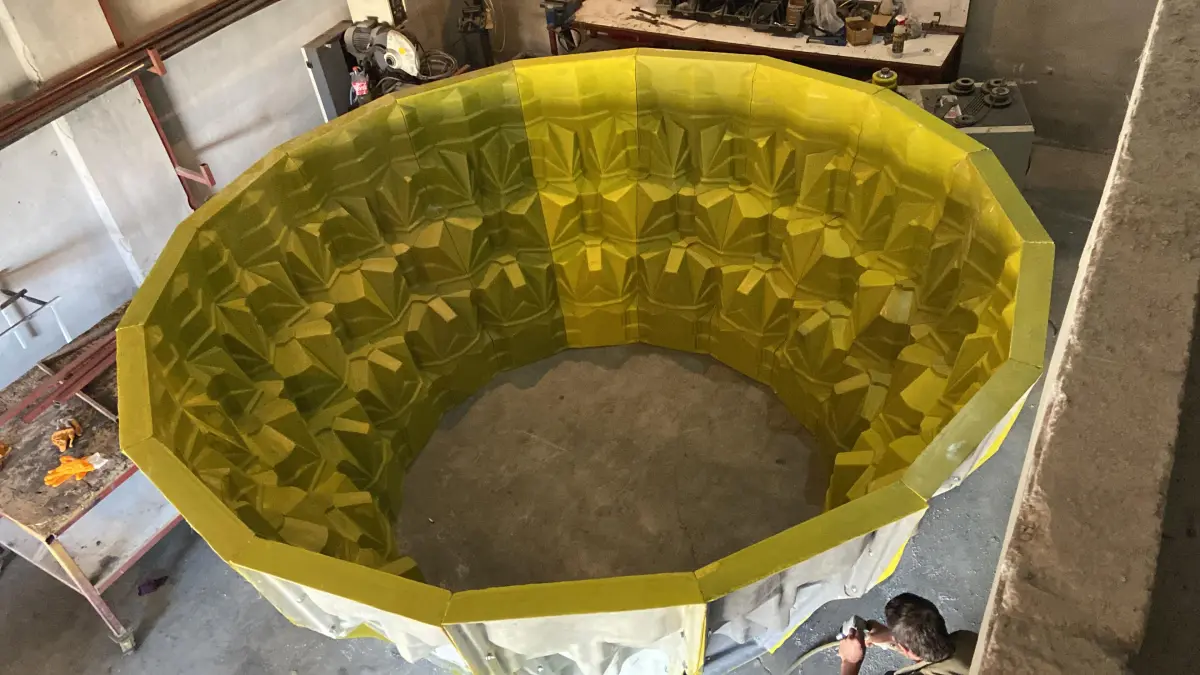 Guinea — Albayrak İnşaat Formwork Manufacture
A fibreglass formwork set produced for Albayrak İnşaat’s Guinea project — numbered, packed and shipped to Africa.
Guinea — Albayrak İnşaat Formwork Manufacture
A fibreglass formwork set produced for Albayrak İnşaat’s Guinea project — numbered, packed and shipped to Africa.
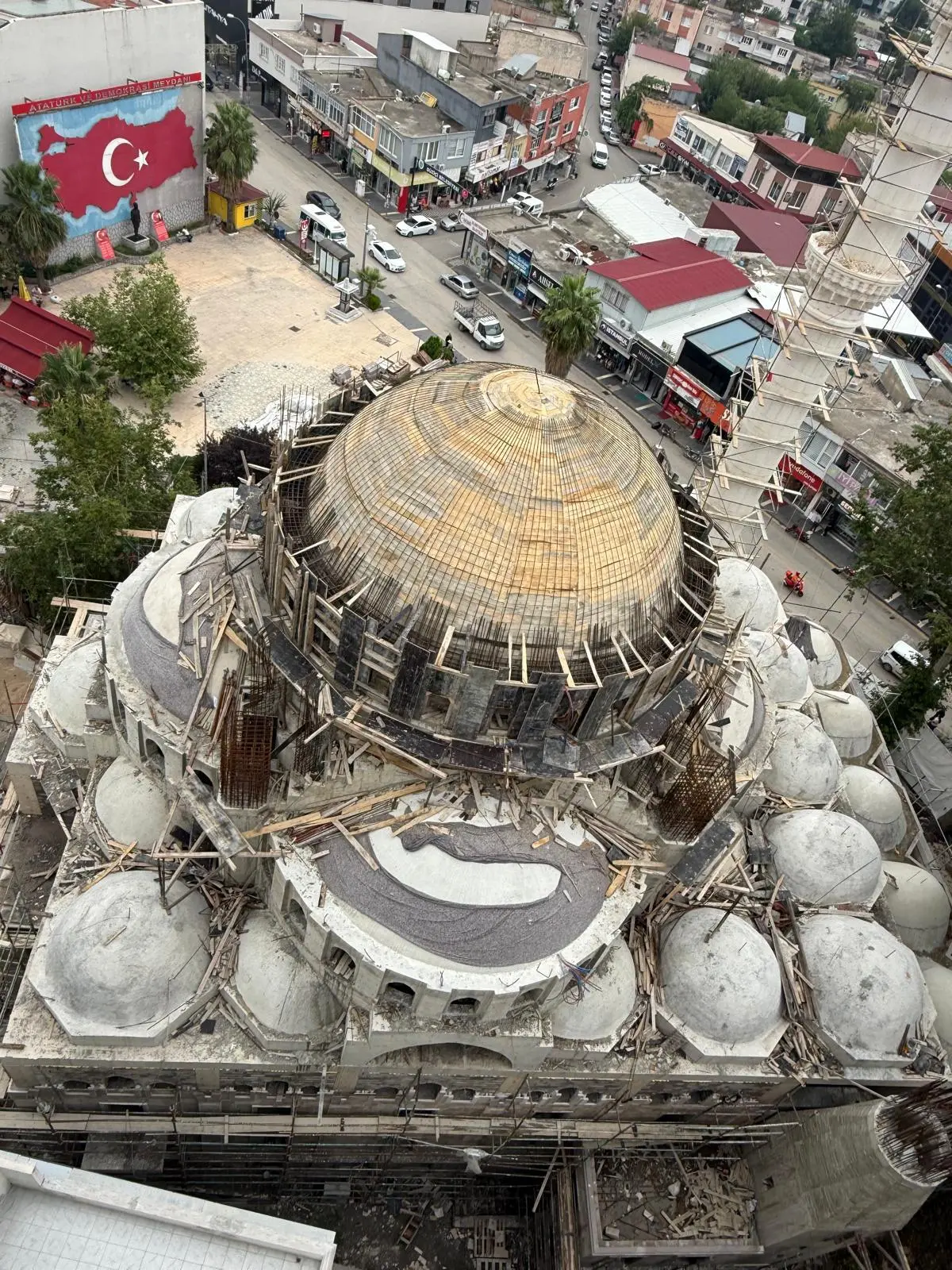 Osmaniye Düziçi Hacılar Central Mosque
A main dome cast on timber formwork, an in-situ minaret and a muqarnas şerefe straight off the mould — an ongoing project running on formwork we make ourselves.
Osmaniye Düziçi Hacılar Central Mosque
A main dome cast on timber formwork, an in-situ minaret and a muqarnas şerefe straight off the mould — an ongoing project running on formwork we make ourselves.