
Gaziantep · Şahinbey · 2021
Gaziantep Şahinbey Millet Mosque — Fibreglass Formwork Manufacture
In brief
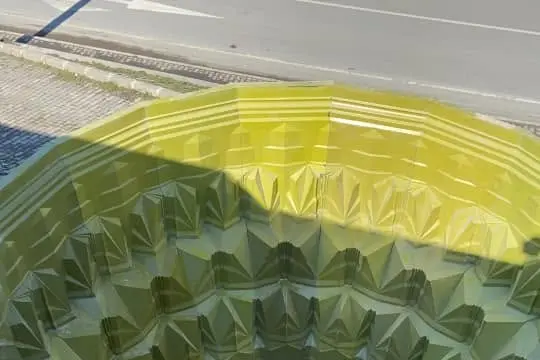
The fibreglass formwork required for Gaziantep Şahinbey Millet Mosque was produced in the Zahan İnşaat workshop in 2021. The negative shells prepared for muqarnas courses, column capitals and motif-bearing architectural surfaces allowed architectural finishes to be obtained from the concrete itself, without any subsequent plaster or stone cladding.
- Face
- Gel-coated fibreglass
- Scope
- Fibreglass formwork manufacture
- Location
- Şahinbey / Gaziantep
- Produced
- 2021
- Components
- Muqarnas, capital and motif-surface moulds
- Service line
- Minaret Formwork
The muqarnas, capitals and border motifs of classical architecture are today mostly stuck on afterwards in plaster or GRC panel. That solution looks well for the first year; but joints, thermal movement and damp bring the seams out within a few years.
At Şahinbey Millet Mosque we moved the motif surfaces into the formwork. The negatives were worked into fibreglass shells, the concrete was poured, and when the formwork was struck the motif was the concrete. There is no joint and no layer that can separate.
How a mould negative is made
A positive model of the motif is produced first, then a fibreglass negative is taken from that model. The sequence runs like this:
- Model — the motif is worked at full scale in timber or foam.
- Negative — gel coat and layers of glass fibre are laid over the model to take off the shell.
- Frame — the shell is braced with steel section against the pressure of fresh concrete.
- Trial pour — the first piece is cast in the workshop; draft angle and surface are checked.
Draft angle in architectural concrete
The commonest mistake in a motif mould is working the negative too steeply for it to release. A mould that cannot be struck damages both itself and the concrete. Every negative is given the smallest draft that does not compromise how the motif reads — a decision belonging to manufacture, not to design.
Site photographs
12 frames. Tap a photograph to enlarge it.
Frequently asked questions about this project
Architectural concrete surface, or cladding added afterwards?
In-situ architectural concrete is clearly superior over a long life because it carries no joints or seams. A cladding solution looks cheaper in first cost, but anchorage, joint sealing and periodic maintenance close the gap over time.
Do you produce bespoke moulds for our own project?
Yes. If you have drawings or a reference photograph, we produce the model and then the negative mould. Beyond mosques we make moulds for capitals, borders, finials and decorative façade elements.
A similar job
Get a quote for Minaret Formwork
Share the dimensions and the current condition; we will price it item by item.
Çobanözü Mah. Toybelen Küçük Sanayi Sitesi, Atakum / Samsun
Our other projects
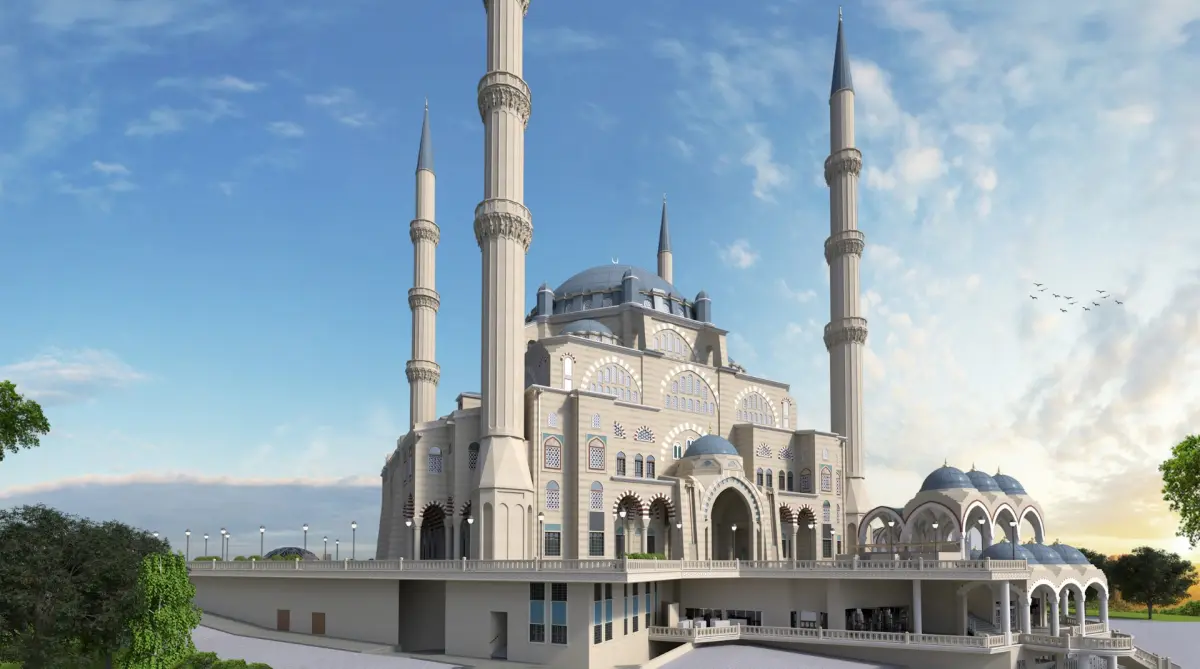 Kosovo Pristina Mosque Minaret Formwork
A complete fibreglass minaret formwork set made in our workshop and shipped to a mosque site in Pristina, Kosovo.
Kosovo Pristina Mosque Minaret Formwork
A complete fibreglass minaret formwork set made in our workshop and shipped to a mosque site in Pristina, Kosovo.
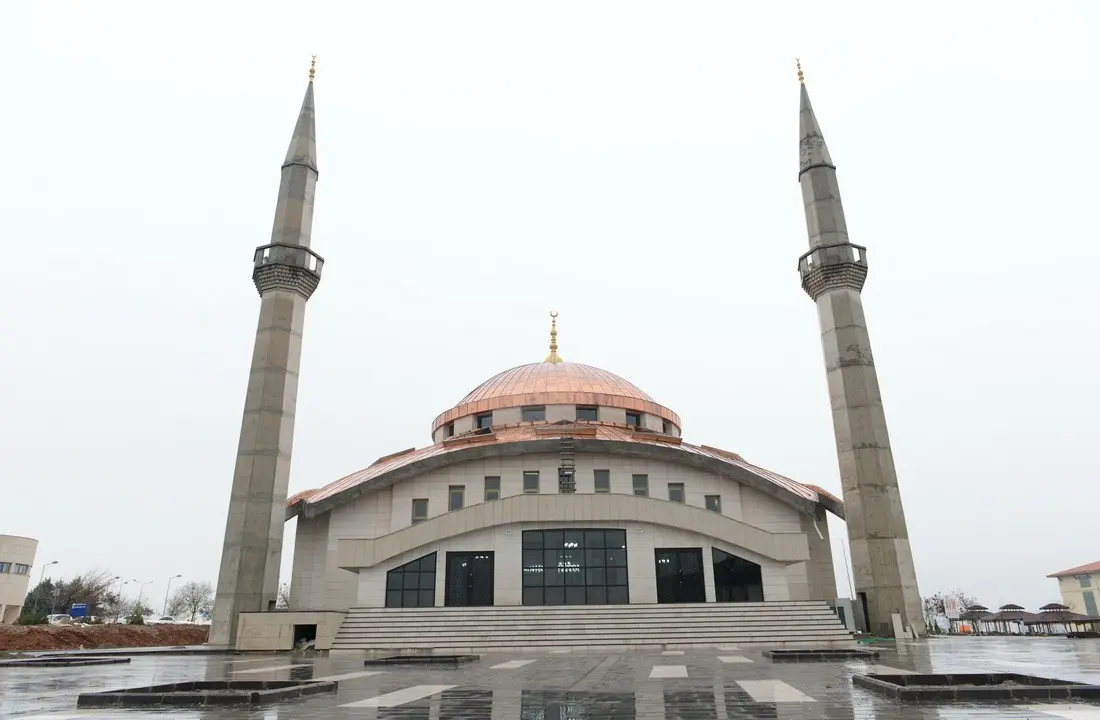 Kahramanmaraş Sütçü İmam University Mosque
Minaret construction at a university campus mosque — a project in which every stage, from base reinforcement to şerefe formwork, is documented.
Kahramanmaraş Sütçü İmam University Mosque
Minaret construction at a university campus mosque — a project in which every stage, from base reinforcement to şerefe formwork, is documented.
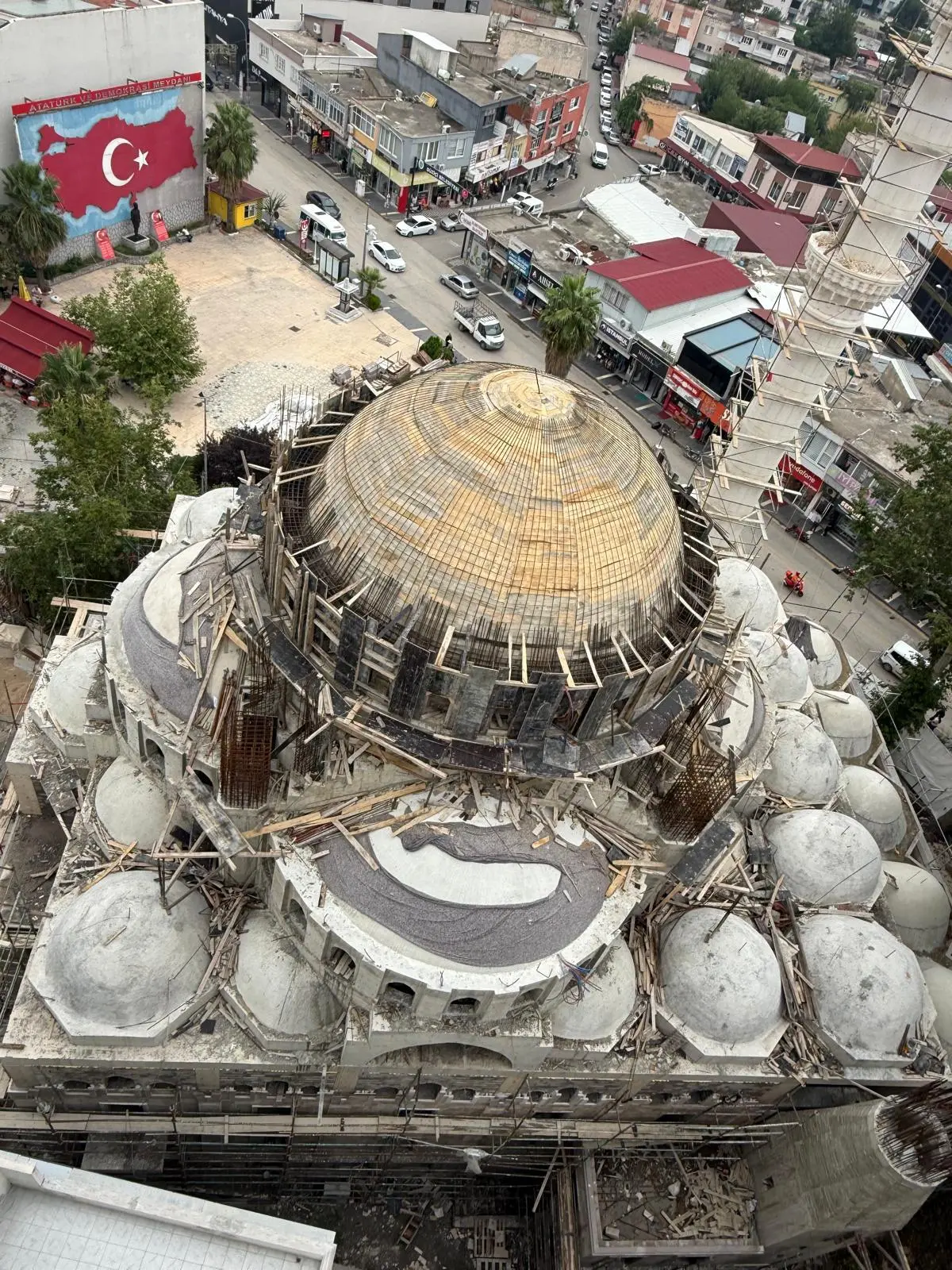 Osmaniye Düziçi Hacılar Central Mosque
A main dome cast on timber formwork, an in-situ minaret and a muqarnas şerefe straight off the mould — an ongoing project running on formwork we make ourselves.
Osmaniye Düziçi Hacılar Central Mosque
A main dome cast on timber formwork, an in-situ minaret and a muqarnas şerefe straight off the mould — an ongoing project running on formwork we make ourselves.